Acne Scar Treatment in Malad: A Complete Guide to Scar Types, Skin Healing and Advanced Treatment Options Acne scars are more than marks left behind by pimples. They are changes in the skin that can develop when inflammation affects the skin’s natural healing process. While some post acne marks fade gradually, established scars may persist …

Acne Scar Treatment in Malad: A Complete Guide to Scar Types, Skin Healing and Advanced Treatment Options
Acne scars are more than marks left behind by pimples. They are changes in the skin that can develop when inflammation affects the skin’s natural healing process. While some post acne marks fade gradually, established scars may persist because the skin’s collagen structure has changed.
The good news is that several treatment approaches can improve the appearance of selected acne scars. The most appropriate option depends on the scar type, depth, skin tone, presence of active acne and individual healing response.
At Cosderma Skin Clinic, Malad, people concerned about acne marks, uneven texture and visible scarring can explore professional skin assessment and appropriate treatment options.
This guide explains how acne scars develop, how to identify the different types, which treatments may help, and what to know before starting a treatment plan.
1. What Happens to the Skin When Acne Causes Scarring?
Acne develops when hair follicles become blocked by oil and dead skin cells. Bacteria, inflammation and hormonal influences can contribute to the development and severity of breakouts.
When inflammation remains close to the skin’s surface, it may leave temporary colour changes. When inflammation affects deeper tissue, it can interfere with collagen production and tissue repair.
Collagen is a structural protein that helps give skin its strength and support. During healing, insufficient or uneven collagen formation can contribute to depressed scars. Excess collagen production can lead to raised scars in susceptible individuals.
Several factors influence whether scarring develops:
Severity of inflammation: Deep, painful or persistent acne may carry a higher risk of scarring.
Duration of acne: Ongoing inflammatory breakouts create repeated opportunities for skin damage.
Picking or squeezing pimples: Manipulating lesions can increase inflammation and tissue injury.
Individual healing response: Genetics and personal skin-healing characteristics influence scar formation.
Delayed acne management: Untreated inflammatory acne may continue to produce new lesions and scars.
Early management of active acne is one of the most important ways to help prevent additional scarring.
2. Acne Marks and Acne Scars Are Not the Same
Understanding this distinction matters because a treatment that helps dark marks may not substantially improve a deep indentation.
A. Post inflammatory hyperpigmentation (PIH)
Post-inflammatory hyperpigmentation appears as flat brown, dark brown or greyish marks after an acne lesion heals. It develops when inflammation stimulates increased melanin production or changes how pigment is distributed in the skin.
PIH is particularly noticeable in many medium-to-deep skin tones and may persist for months, depending on its depth and the individual’s skin response.
Potential management options include:
Daily broad-spectrum sunscreen
Suitable topical ingredients recommended for the individual’s skin
Selected chemical peels under professional supervision
Medical treatment for the underlying acne or pigmentation condition
PIH does not usually create a depression in the skin. It may fade over time, although deeper or persistent pigmentation can take longer to improve.
B. Post-inflammatory erythema (PIE)
Post-inflammatory erythema refers to flat red, pink or purplish marks that remain after inflammation. It is associated with changes in small blood vessels and the skin’s inflammatory response.
These marks are different from brown pigmentation. Treatments intended mainly to reduce melanin may therefore be less effective for redness.
Depending on the diagnosis, management may involve time, gentle skincare and selected medical or device-based options.
C. Atrophic acne scars
Atrophic scars appear as depressions because of tissue loss or changes in collagen during healing. They are among the most common forms of permanent acne scarring.
Three major types are recognised:
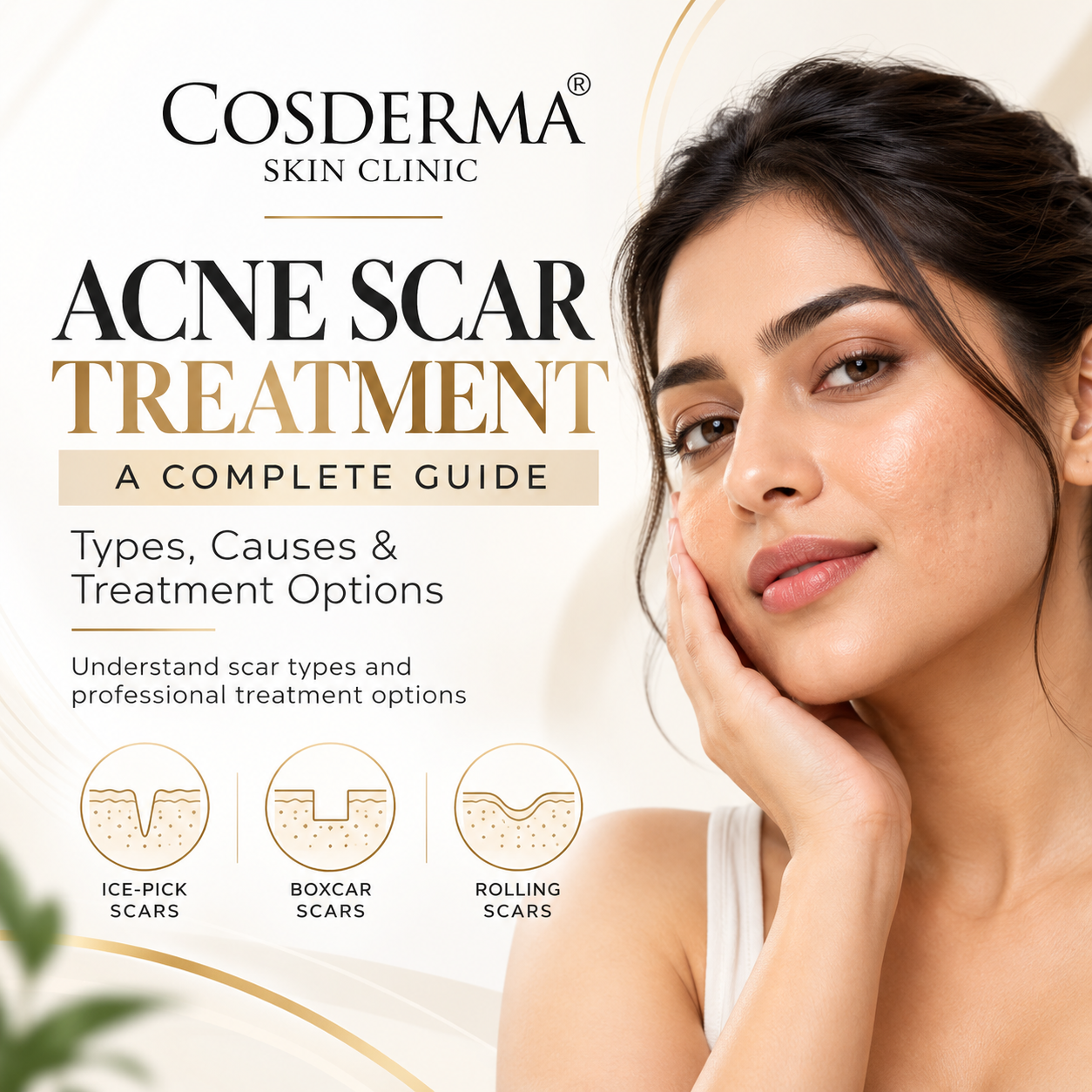
Ice-pick scars: Narrow, deep indentations that extend into the skin. Their small surface opening can make them difficult to treat with general resurfacing alone.
Boxcar scars: Round or oval depressions with more defined edges. They can be shallow or deep.
Rolling scars: Broad, sloping depressions that create an uneven or wave-like surface. Fibrous bands beneath the skin may pull the surface downwards.
Different scar types may require different procedures, and combination treatment is sometimes considered.
D. Hypertrophic scars and keloids
Raised scars develop when collagen accumulates excessively during healing.
Hypertrophic scars remain within the boundaries of the original injury.
Keloids may extend beyond the original injury and continue growing in some individuals.
These scars should not automatically be treated with the same procedures used for depressed scars. Treatments that create additional skin injury may be unsuitable for certain raised scars.
3. How Is the Correct Acne Scar Treatment Selected?
There is no universal acne scar treatment. An appropriate assessment considers several factors before a procedure is recommended.
Scar type and depth
Superficial texture changes may respond to different approaches from deep ice-pick scars or rolling scars tethered by fibrous tissue.
Skin tone and pigmentation history
People prone to post-inflammatory hyperpigmentation may need a cautious approach to procedures that cause inflammation. Treatment settings, timing and aftercare can influence the risk of dark marks.
Active acne
If inflammatory acne is still developing, it is often important to control it before starting procedures for established scars. Otherwise, new scars may continue to form during treatment.
Medical history and medications
A professional should review relevant medical conditions, medications, previous procedures, history of abnormal scarring and any tendency towards cold sores or skin infections when appropriate.
Realistic expectations
The aim of treatment is generally to improve the appearance of scars, texture and overall skin smoothness. Complete scar removal cannot be guaranteed, and results vary between individuals.
4. Microneedling for Acne Scars: How Does It Work?
Microneedling uses fine needles to create controlled micro-injuries in the skin. This triggers a wound-healing response that can stimulate collagen remodelling over time.
It may be considered for selected atrophic acne scars and uneven skin texture.
Potential benefits
Gradual improvement in the appearance of selected depressed scars
Improvement in certain texture irregularities
Collagen remodelling over a series of treatments
What should you know before treatment?
Microneedling is not suitable for every skin condition. Active infection, inflamed acne, some inflammatory skin disorders and other medical factors may affect whether it can be performed safely.
Possible side effects include redness, swelling, pinpoint bleeding, irritation, infection and changes in pigmentation. Incorrect technique or inappropriate needle depth can increase complications.
Professional treatment should use appropriate sterile equipment and follow suitable infection-control protocols. Needling should not be performed aggressively at home or over active acne.
Results develop gradually, and multiple sessions may be needed.
5. Fractional Laser Resurfacing: Improving Selected Scar Types
Fractional laser procedures deliver laser energy to microscopic areas of the skin while leaving surrounding tissue relatively less affected. Depending on the technology, the treatment may stimulate collagen remodelling and improve selected textural irregularities.
Ablative fractional lasers remove microscopic columns of tissue, while non-ablative systems heat targeted tissue without removing the same amount of surface skin.
Which scars may benefit?
Fractional laser treatment may improve selected atrophic scars and uneven texture. The suitability of the procedure depends on scar type, depth, device, skin tone and individual healing characteristics.
Recovery and risks
Recovery varies by laser type and intensity. Temporary redness, swelling, dryness, peeling and sensitivity may occur. Some procedures involve more downtime than others.
Potential complications include infection, prolonged redness, scarring and post-inflammatory hyperpigmentation. People with darker skin tones may require particularly careful device selection and treatment planning.
A consultation should explain the type of laser being considered, its expected benefits, likely recovery period and alternatives.
6. Chemical Peels for Acne Marks and Uneven Skin Tone
Chemical peels use selected chemical agents to produce controlled exfoliation or injury at a chosen skin depth. The type and strength of the peel determine its intended use and potential risks.
Different formulations may be used for different concerns, including selected forms of acne, superficial pigmentation and uneven texture.
How can a chemical peel help?
Depending on the formulation and indication, a peel may:
Improve the appearance of some superficial post-acne marks
Support the management of selected acne related concerns
Improve certain forms of uneven skin tone
Produce a smoother-looking surface
Chemical peels generally have limited ability to correct deep, established atrophic scars on their own.
Why professional selection matters
The wrong peel, concentration, application time or frequency can cause irritation, burns and worsening pigmentation. Stronger peels are not automatically better.
The treatment plan should take account of skin sensitivity, recent sun exposure, medications, active acne, previous procedures and pigmentation history. Post-treatment care and sun protection are important.
7. Subcision and Other Targeted Procedures
Some depressed acne scars are attached to deeper tissue by fibrous bands. In selected cases, a medical professional may consider subcision, a procedure that releases these bands beneath the scar.
Subcision may be useful for appropriate rolling scars, but it is not a universal solution for all acne scars.
Possible complications include bruising, swelling, pain, infection, pigment changes and, less commonly, other tissue-related complications. It should only be considered after an appropriate assessment by a suitably qualified practitioner.
Other targeted techniques may be considered for particular scar patterns. For example, certain narrow, deep scars may need a different approach from broad, shallow depressions.
The choice depends on the specific scar and the professional’s assessment rather than the popularity of a particular procedure.
8. Why Combination Treatment May Be Recommended
Many people have more than one scar type. A person may have rolling scars across the cheeks, narrow ice-pick scars in one area and dark marks from recent acne elsewhere.
A single procedure may not address all these concerns equally well.
Depending on the assessment, a treatment plan may include:
Control of active acne
Treatment for post inflammatory pigmentation
A procedure selected for a particular scar type
Resurfacing or collagen-remodelling procedures
Maintenance skincare and sun protection
Treatments are often staged rather than performed all at once. Allowing adequate healing time between procedures can be important for safety and for evaluating progress.
The plan should be adjusted according to the skin’s response.
9. Acne Scar Treatment in Indian Skin: Important Considerations
Skin tones common in India can be more susceptible to post-inflammatory hyperpigmentation following inflammation or skin injury. This does not mean that aesthetic procedures are unsuitable, but it makes careful assessment and treatment planning particularly important.
Before a procedure, discuss:
Pigmentation risk: Ask how your skin tone and history of dark marks affect treatment choice.
Device and settings: Laser technologies and settings are not interchangeable. The appropriate option depends on the device, indication and practitioner expertise.
Recent tanning or sun exposure: Recent sun exposure may affect the timing and safety of some procedures.
Aftercare: Ask which skincare ingredients to pause, how to cleanse and moisturise, and how to protect the skin during healing.
Warning signs: Understand which symptoms are expected and which require prompt medical attention.
Persistent pain, increasing redness, blistering, pus or other signs of infection should not be ignored after a procedure.
10. What Can You Do at Home to Support Scar Management?
Professional procedures are only one part of acne care. A suitable home routine helps support the skin barrier and reduce the chance of additional breakouts.
Use a gentle cleanser
Cleanse without aggressive scrubbing. Over-cleansing can irritate the skin and may make inflammation more noticeable.
Moisturise appropriately
Choose a moisturiser that suits your skin type. Supporting the skin barrier is especially important when using prescribed acne products or recovering from procedures.
Apply broad spectrum sunscreen
Use broad-spectrum SPF 30 or higher every day. Reapply approximately every two hours outdoors and after swimming or heavy sweating, following product instructions.
Sunscreen helps protect against UV damage and may reduce further darkening of post-acne pigmentation.
Avoid picking or squeezing lesions
Picking increases trauma and can prolong inflammation. If painful or deep acne continues, seek professional advice rather than repeatedly manipulating the lesions.
Use active ingredients carefully
Ingredients such as salicylic acid, azelaic acid or retinoids may be useful for selected acne or pigmentation concerns. However, they are not interchangeable, and they can cause irritation when used incorrectly.
Retinoids are not appropriate during pregnancy or when trying to conceive without medical guidance. Seek advice before starting or combining strong active ingredients, particularly if you have sensitive skin.
Give treatment time
Pigmentation may take weeks or months to improve, and scar remodelling is generally gradual. Frequent switching between products or procedures can make it difficult to judge effectiveness and may increase irritation.
11. How Long Does Acne Scar Treatment Take?
The timeline depends on the concern and treatment method.
Flat pigmentation may gradually fade with appropriate care, although some marks remain persistent. Procedures for atrophic scars usually involve a series of treatments with recovery time between sessions.
Collagen remodelling occurs over time, so improvements may continue after the immediate recovery period. The number of sessions and degree of improvement depend on the scar type, treatment choice and individual response.
During consultation, ask for a realistic timeline, the anticipated number of sessions, the total estimated cost and the possibility of maintenance treatment.
12. Questions to Ask Before Choosing an Acne Scar Procedure
Before committing to a treatment, consider asking:
Are my concerns pigmentation, redness, depressed scars or raised scars?
Is my active acne adequately controlled?
Why is this procedure appropriate for my particular scar type?
Who will perform the procedure, and what qualifications do they have?
What are the common and serious risks for my skin tone?
What downtime and aftercare should I expect?
How many sessions might be needed, and what improvement is realistic?
What alternatives are available if I am not a suitable candidate?
A clear consultation should address both benefits and limitations without promising perfect skin.
13. Professional Skin Assessment at Cosderma Skin Clinic, Malad
Acne scars vary considerably, and choosing the right approach begins with understanding the skin concern. Dark marks, persistent redness, depressed scars and raised scars may require different management strategies.
At Cosderma Skin Clinic, Malad, individuals can enquire about available skin assessment and treatment options for acne, post-acne marks and uneven skin texture.
A personalised consultation can help determine which options may be appropriate, whether active acne should be managed first and what expectations are realistic. Treatment selection should be based on an individual assessment, with clear information about potential risks, recovery and aftercare.
If you are searching online for acne scar treatment in Malad, prioritise professional assessment, transparent information and a treatment plan suited to your skin.
Frequently Asked Questions About Acne Scars
1. Can acne scars disappear completely?
Complete removal cannot be guaranteed. Some flat marks fade with time, while established depressed or raised scars may persist. Appropriate treatment can improve the appearance of selected scars.
2. Which treatment is best for deep acne scars?
There is no single best treatment for every deep scar. Ice-pick, boxcar and rolling scars have different structures and may need different targeted procedures or a combination approach.
3. Is microneedling safe for darker skin tones?
Microneedling may be appropriate for selected individuals, but skin tone, active acne, pigmentation history and technique all matter. Improper treatment can cause inflammation, infection or pigmentation changes.
4. Can chemical peels remove acne scars?
Chemical peels may help selected superficial acne marks and some textural concerns. They generally cannot remove deep established scars on their own.
5. Can acne scars be treated while acne is still active?
Active acne should usually be assessed and controlled before many scar procedures are considered. The timing depends on acne severity, the proposed procedure and the individual’s skin condition.
6. Will acne scars return after treatment?
A treated scar does not necessarily return to its previous appearance, but new acne can cause new scars. Some people also need maintenance care or additional treatment to sustain improvement.
7. Does sunscreen help with acne scars?
Sunscreen does not remove structural scars, but it helps protect the skin from UV damage and can reduce the darkening of post-inflammatory marks.
Conclusion: Choose an Informed Approach to Acne Scar Care
Acne scarring involves more than visible marks. It can reflect changes in pigmentation, blood vessels, collagen and the structure of the skin. Understanding these differences helps explain why treatment must be selected carefully.
A thoughtful plan may involve active acne management, suitable skincare, targeted procedures and consistent sun protection. Results vary, and realistic expectations are essential.
At Cosderma Skin Clinic, Malad, begin by understanding your skin concerns and exploring suitable options with a qualified professional. An informed, individualised approach can help you make better decisions about acne scar care.
Book a Consultation
It’s easy and free!