Dark Circle Treatment in Malad: Causes, Prevention and Professional Treatment Options Are dark circles making your eyes look tired, dull or older than you feel? Dark circles under the eyes are a common skin concern affecting both men and women. They can develop due to pigmentation, genetics, ageing, lifestyle habits, allergies or changes in the …

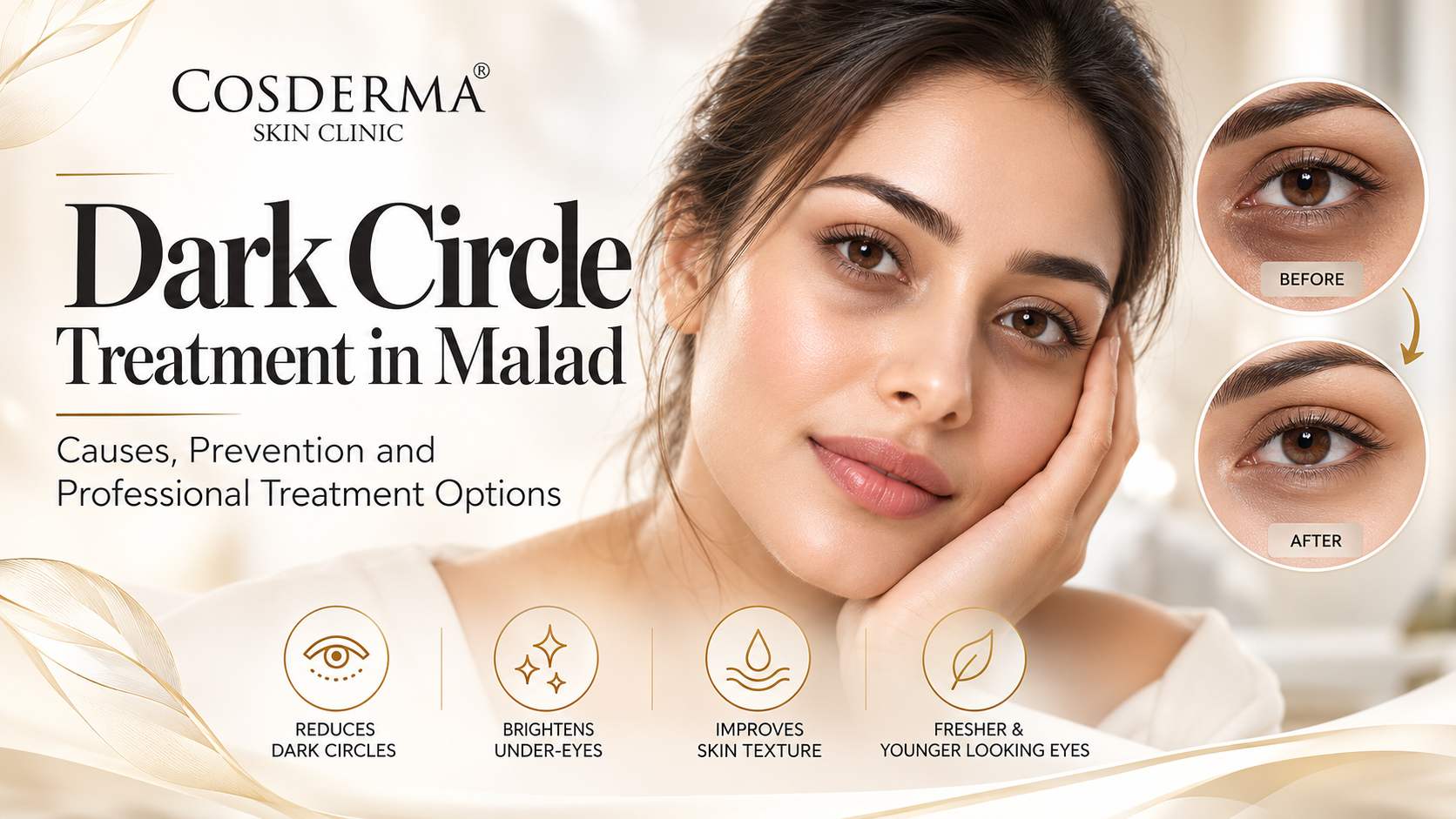
Dark Circle Treatment in Malad: Causes, Prevention and Professional Treatment Options
Are dark circles making your eyes look tired, dull or older than you feel? Dark circles under the eyes are a common skin concern affecting both men and women. They can develop due to pigmentation, genetics, ageing, lifestyle habits, allergies or changes in the delicate skin around the eyes.
Although dark circles are usually harmless, they can affect facial appearance and make the eyes look tired even after adequate rest.
The good news is that several professional skin treatments and skincare approaches can help improve the appearance of dark circles.
At Cosderma Skin Clinic, Malad, understanding the underlying cause of dark circles is the first step towards choosing an appropriate treatment for brighter, fresher-looking under-eyes.
In this guide, we explore the common causes of dark circles, preventive skincare practices and modern professional treatment options.
1. What Are Dark Circles?
Dark circles refer to the darker appearance of the skin beneath the lower eyelids. They may appear brown, blue, purple, grey or almost black, depending on the underlying cause and individual skin characteristics.
The skin around the eyes is naturally thinner and more delicate than other facial areas. As a result, blood vessels, pigmentation and structural changes beneath the skin can become more visible.
Dark circles may develop gradually or become more noticeable with age, fatigue, sun exposure and other contributing factors.
2. What Causes Dark Circles Under the Eyes?
Dark circles can develop due to several factors. Identifying the underlying cause is important because different types of dark circles require different treatment approaches.
A. Genetics and Hereditary Factors
Genetics can play an important role in the development of dark circles. Some individuals naturally have increased pigmentation or thinner under eye skin.
If dark circles are common among family members, hereditary factors may contribute to their appearance.
B. Lack of Sleep and Fatigue
Insufficient sleep can make the skin appear dull and tired. It may also make underlying blood vessels more noticeable, contributing to the appearance of dark circles.
Irregular sleep schedules and prolonged fatigue can make existing under-eye concerns more noticeable.
C. Pigmentation and Melanin Accumulation
Excess melanin production around the eyes can cause brown or dark pigmentation.
Common contributing factors include:
Sun exposure.
Genetic pigmentation.
Skin inflammation.
Frequent rubbing of the eyes.
Post-inflammatory hyperpigmentation.
This type of dark circle is often referred to as pigmented dark circles.
D. Ageing and Thinning Skin
As we age, collagen and elastin production naturally decline.
The undereye skin may become thinner, making blood vessels more visible. Fat distribution and changes in facial structure can also create shadows beneath the eyes.
These changes can contribute to a tired or hollow appearance.
E. Allergies and Eye Rubbing
Allergic conditions can cause itching, inflammation and swelling around the eyes.
Repeated rubbing may irritate the delicate skin and contribute to pigmentation, sometimes resulting in what is commonly called allergic dark circles.
F. Dehydration and Lifestyle Factors
Dehydration may make the skin appear dull and tired. Smoking, excessive sun exposure, stress and poor lifestyle habits can also contribute to an unhealthy looking under eye appearance.
3. Different Types of Dark Circles
Understanding the type of dark circles is essential for selecting the right treatment.
1. Pigmented Dark Circles
These usually appear brown or dark brown due to increased melanin pigmentation around the eyes.
Common causes:
Genetics.
Sun exposure.
Post-inflammatory pigmentation.
Chronic eye rubbing.
2. Vascular Dark Circles
These may appear blue, purple or reddish because of visible blood vessels beneath thin under-eye skin.
Common causes:
Thin skin.
Allergies.
Poor sleep.
Vascular visibility.
3. Structural Dark Circles
These develop due to hollowness, tear trough depressions or changes in facial fat distribution.
They create shadows that make the under-eye area appear darker.
4. Age Related Dark Circles
These develop due to collagen loss, skin thinning and changes in the surrounding facial structure.
Some individuals may have a combination of two or more types of dark circles.
4. Professional Dark Circle Treatment Options
There is no single treatment that works for every type of dark circle. The ideal approach depends on pigmentation, skin thickness, vascular visibility, hollowness and individual skin condition.
At Cosderma Skin Clinic, Malad, professional treatment options can be explored following an appropriate skin assessment.
A. Under Eye Chemical Peel
Under eye chemical peels are designed to improve the appearance of selected types of superficial pigmentation.
Carefully selected exfoliating ingredients help remove damaged surface skin cells and support a more even-looking complexion.
Common ingredients used in specialised under-eye formulations may include:
Lactic Acid.
Glycolic Acid.
Mandelic Acid.
Other professionally selected brightening ingredients.
Benefits:
Helps improve superficial under-eye pigmentation.
Supports a brighter looking complexion.
Helps refine skin texture.
Improves the appearance of uneven skin tone.
The under eye area is highly delicate, so only suitable formulations and professional application techniques should be used.
B. Under Eye Fillers
Under-eye fillers may be considered when dark circles are primarily caused by tear trough hollowness and structural shadows.
Hyaluronic acid based dermal fillers can help restore volume in carefully selected patients.
Benefits:
Helps improve the appearance of under-eye hollowness.
Softens tear trough depressions.
Reduces shadowing caused by volume loss.
Creates a smoother-looking transition between the lower eyelid and cheek.
Not everyone is suitable for under-eye fillers. The procedure requires an experienced medical injector because the under-eye region has complex anatomy and potential vascular complications.
C. PRP Treatment for Under Eyes
Platelet Rich Plasma (PRP) is prepared from the patient’s own blood and contains concentrated platelets.
It may be used as a skin rejuvenation treatment to support tissue repair and improve selected under-eye concerns.
Potential benefits:
Supports natural tissue repair.
May improve the appearance of skin quality.
May help improve mild under-eye crepiness.
Supports collagen-related skin rejuvenation.
PRP is not a guaranteed treatment for dark pigmentation or structural hollowness. Results vary between individuals.
D. Microneedling for Under-Eye Rejuvenation
Microneedling involves creating controlled micro injuries in the skin using fine sterile needles.
This stimulates the skin’s natural repair response and collagen production.
Potential benefits:
Helps improve selected superficial texture concerns.
Supports collagen production.
May improve mild fine lines.
Promotes smoother looking skin.
Treatment around the eyes requires specialised equipment, suitable depth and trained medical supervision.
E. Laser Treatments for Dark Circles
Selected laser technologies may be used to address certain types of under-eye pigmentation and skin texture concerns.
The choice of laser depends on the pigmentation pattern, skin tone and underlying cause.
Potential benefits:
Helps target selected pigmentation concerns.
May improve uneven skin tone.
Can support skin rejuvenation.
May improve selected textural irregularities.
Laser treatment is not suitable for every type of dark circle. In darker skin tones, inappropriate settings can increase the risk of post-inflammatory pigmentation.
F. Medical Grade Under-Eye Skincare
A suitable skincare routine can support professional treatment and help maintain under-eye skin health.
Ingredients commonly used in under-eye products include:
Vitamin C: Helps improve the appearance of pigmentation and provides antioxidant support.
Niacinamide: Supports the skin barrier and helps improve uneven-looking skin tone.
Hyaluronic Acid: Helps maintain hydration and improve the appearance of fine lines caused by dryness.
Caffeine: May temporarily improve the appearance of puffiness.
Peptides: Used in skincare formulations to support skin conditioning and improve the appearance of fine lines.
A skincare professional can help select appropriate products based on individual concerns.
5. Which Dark Circle Treatment Is Best for You?
The right treatment depends on what is causing the darkness beneath your eyes.
| Type of concern | Treatment options |
|---|---|
| Pigmented dark circles | Selected under-eye peels, topical skincare |
| Vascular dark circles | Cause specific management, selected laser treatments |
| Under-eye hollowness | Tear trough fillers in suitable patients |
| Fine lines and thin skin | Selected rejuvenation procedures, skincare |
| Mild texture concerns | Carefully selected microneedling or PRP |
| Age-related changes | Individualised combination approach |
Important: Dark circles are often multifactorial. A combination of treatments may be considered when more than one underlying cause is present.
6. How to Prevent Dark Circles Naturally
Professional treatments can help improve existing dark circles, but healthy daily habits also play an important role in maintaining the under-eye area.
Here are some useful preventive practices:
1. Maintain a Consistent Sleep Schedule
Aim for approximately 7–9 hours of sleep each night to support overall skin health.
2. Use Sunscreen Daily
Apply a suitable broad spectrum sunscreen around the orbital area, avoiding direct contact with the eyes. Sunglasses can provide additional protection.
3. Stay Hydrated
Maintain adequate daily water intake to support normal skin hydration.
4. Avoid Rubbing Your Eyes
Frequent rubbing can irritate the delicate under-eye skin and worsen pigmentation.
5. Follow a Gentle Skincare Routine
Use a suitable cleanser, moisturiser and eye-care product according to your skin needs.
6. Manage Allergies
If itching, sneezing or eye irritation is contributing to dark circles, consult a healthcare professional for appropriate allergy management.
7. Maintain a Balanced Diet
Include a variety of fruits, vegetables, protein sources and nutrient-rich foods. If dark circles are associated with fatigue or other symptoms, medical evaluation may help identify nutritional deficiencies.
7. How Many Sessions Are Required for Dark Circle Treatment?
The number of sessions depends on the type of dark circles, selected treatment and individual response.
For example:
Under-eye chemical peels may require a planned series of sessions.
PRP may require multiple sessions depending on the treatment protocol.
Laser treatments may require several sessions.
Fillers may provide improvement after an individual treatment, although duration varies.
Skincare requires consistent use over time.
Results are not immediate for every treatment. Pigmentation and skin-quality improvements may take several weeks or longer.
8. When Should You Consult a Skin Specialist?
You may consider a professional consultation if:
Dark circles persist despite adequate sleep.
Under-eye pigmentation becomes more noticeable.
You experience persistent puffiness or hollowness.
Dark circles are affecting your confidence.
Home skincare products are not improving the concern.
You want to understand which treatment is suitable for your skin.
Sudden darkening, particularly on one side, or dark circles associated with pain, swelling or other new symptoms should be medically evaluated rather than treated as a cosmetic concern.
9. Frequently Asked Questions About Dark Circle Treatment
Q1. What is the best treatment for dark circles?
The best treatment depends on the underlying cause. Under-eye peels may help selected pigmentation concerns, fillers may address hollowness, and certain laser or rejuvenation treatments may be appropriate for other concerns.
Q2. Can dark circles be removed permanently?
Complete permanent removal cannot be guaranteed. Genetic, age-related and structural factors may continue to contribute to dark circles. Appropriate treatment can help improve their appearance.
Q3. Are under-eye chemical peels effective?
Professionally selected under-eye peels may help improve superficial pigmentation and uneven skin tone. They should only be performed using suitable formulations and techniques.
Q4. Are under-eye fillers safe?
Under-eye fillers can be effective in carefully selected patients but carry risks, including swelling, lumps, vascular occlusion and, very rarely, vision-threatening complications. They should only be performed by appropriately trained and experienced medical professionals.
Q5. Does lack of sleep cause dark circles?
Poor sleep can make dark circles more noticeable by contributing to tired-looking skin and increased visibility of underlying blood vessels.
Q6. Can vitamin C help reduce dark circles?
Vitamin C may help improve the appearance of superficial pigmentation and support skin antioxidant protection. Results depend on the cause of dark circles and the formulation used.
Q7. Are dark circles caused by vitamin deficiencies?
Some nutritional deficiencies, including iron deficiency, may be associated with pallor or tired-looking skin. Persistent dark circles accompanied by fatigue or other symptoms may warrant medical evaluation.
Q8. Can dark circles occur in young adults?
Yes. Genetics, allergies, pigmentation and naturally thin under-eye skin can cause dark circles even in younger individuals.
Conclusion: Give Your Eyes the Care They Deserve
Dark circles can develop due to several factors, including genetics, pigmentation, ageing, allergies and lifestyle habits. Understanding the underlying cause is essential before selecting an appropriate treatment.
Modern aesthetic treatments such as under-eye chemical peels, PRP, selected laser procedures, microneedling and tear trough fillers offer different approaches to improving the appearance of under-eye concerns.
The most important step is choosing a treatment that addresses your specific skin concern rather than relying on a one-size-fits-all solution.
At Cosderma Skin Clinic, Malad, you can explore personalised skin treatment options based on professional assessment and individual requirements.
Take the first step towards brighter, fresher-looking eyes. Book your consultation at Cosderma Skin Clinic, Malad, today!
Book a Consultation
It’s easy and free!