Adult Acne and Acne Scars: Causes, Treatments and How to Achieve Healthier Looking Skin Acne is one of the most common skin concerns affecting teenagers and adults. While many people associate acne with adolescence, breakouts can continue well into adulthood or even appear for the first time after the age of 25.Persistent pimples, clogged pores, …

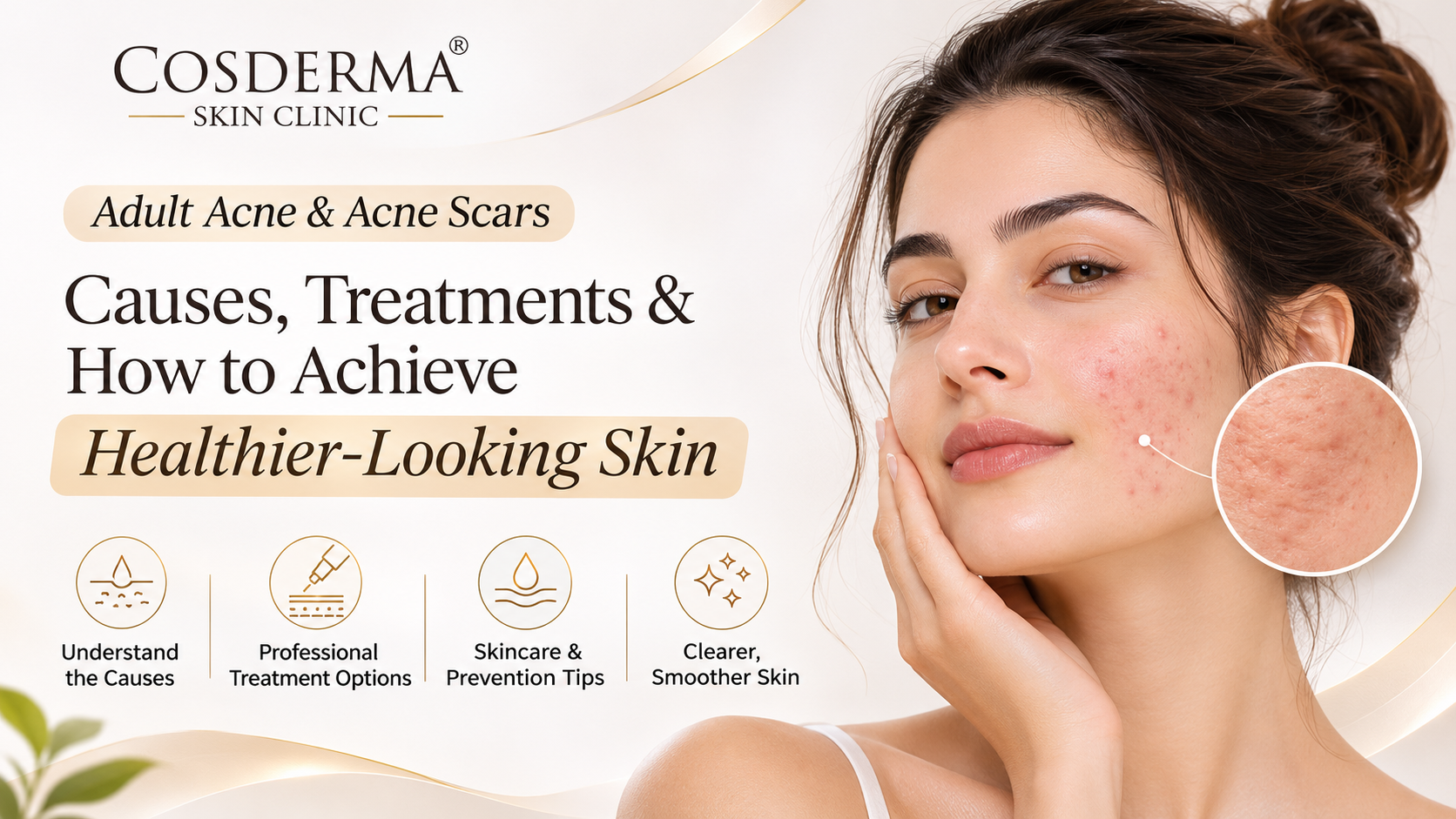
Adult Acne and Acne Scars: Causes, Treatments and How to Achieve Healthier Looking Skin
Acne is one of the most common skin concerns affecting teenagers and adults. While many people associate acne with adolescence, breakouts can continue well into adulthood or even appear for the first time after the age of 25.
Persistent pimples, clogged pores, blackheads, whiteheads and painful breakouts can affect not only your skin but also your confidence. In some cases, acne can leave behind dark spots, uneven skin texture and permanent scars.
The good news is that modern dermatology offers several treatment options to help manage active acne, improve skin texture and reduce the appearance of acne scars.
At Cosderma Skin Clinic, Malad, understanding your skin concerns is the first step towards exploring suitable professional skincare and aesthetic treatment options.
1. What Is Acne and Why Does It Occur?
Acne is a skin condition that develops when hair follicles become clogged with excess sebum (natural skin oil), dead skin cells and other debris.
When pores become blocked, inflammation can develop, resulting in different types of acne lesions.
Common types include:
Whiteheads: Small, closed bumps caused by clogged pores.
Blackheads: Open clogged pores that appear dark due to oxidation.
Papules: Small, inflamed red bumps.
Pustules: Inflamed pimples containing pus.
Nodules and Cysts: Deeper, painful inflammatory acne lesions that may increase the risk of scarring.
Identifying the type of acne is important because different forms require different treatment approaches.
2. Common Causes of Adult Acne
Adult acne can develop due to several factors. Understanding these triggers can help in choosing an appropriate skincare routine and treatment plan.
Hormonal Changes
Hormonal fluctuations can increase oil production and contribute to clogged pores. This is one reason acne may worsen around menstrual cycles or during certain hormonal changes.
Excess Sebum Production
When sebaceous glands produce excess oil, it can combine with dead skin cells and contribute to blocked pores.
Stress and Lifestyle
Stress may aggravate existing acne in some individuals. Irregular sleep patterns and certain lifestyle habits may also influence skin health.
Incorrect Skincare Products
Heavy creams, pore clogging makeup and unsuitable haircare products may contribute to breakouts in acne prone individuals.
Environmental Factors
Heat, humidity, pollution and sweat can contribute to skin congestion, particularly when the skin is not cleansed appropriately.
Genetics
Family history can influence an individual’s tendency to develop acne and certain types of acne scarring.
3. Understanding Acne Marks vs Acne Scars
Many people use the terms acne marks and acne scars interchangeably, but they are different.
Post Acne Marks:
These are flat discoloured areas that remain after a pimple heals. They may appear brown, dark or reddish depending on the skin and type of inflammation.
Acne Scars:
These involve changes in the skin’s texture and structure. They may appear as depressed areas or raised marks.
Common acne scar types include:
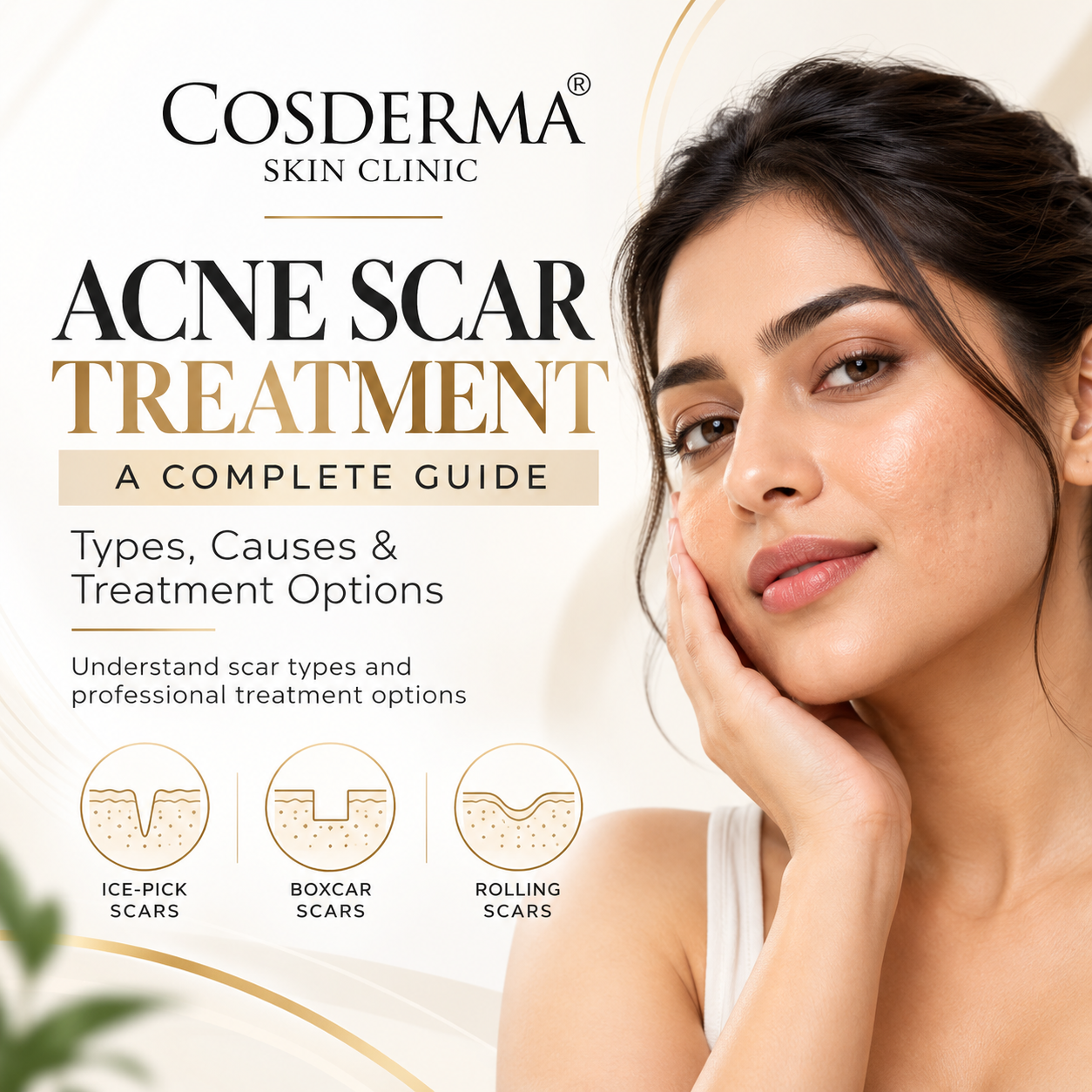
Ice pick scars
Boxcar scars
Rolling scars
Hypertrophic scars
Keloid scars
Identifying the type of scar is essential because each may require a different treatment approach.
4. Professional Acne Treatment Options
Professional acne treatment focuses on controlling active breakouts, reducing inflammation and preventing future scarring.
Depending on the severity of acne, a qualified dermatologist may recommend topical medications, oral medications or selected professional procedures.
A. Chemical Peel Treatment
Chemical peels use carefully selected exfoliating acids to encourage the removal of dead skin cells and improve skin renewal.
Common ingredients include:
Salicylic Acid
Glycolic Acid
Lactic Acid
Mandelic Acid
Potential benefits:
Helps improve clogged pores.
Supports acne management.
Improves uneven skin texture.
Helps reduce the appearance of post acne marks.
Promotes a smoother looking complexion.
The type and strength of peel should be selected according to skin type, sensitivity and acne severity.
B. Microneedling for Acne Scars
Microneedling is a minimally invasive procedure that uses fine needles to create controlled micro injuries in the skin.
This stimulates the body’s natural wound healing response and collagen production.
Potential benefits:
Helps improve the appearance of certain depressed acne scars.
Supports collagen remodelling.
Helps improve uneven skin texture.
Can reduce the appearance of enlarged pores.
Microneedling is generally considered for selected types of acne scarring rather than active, inflamed acne.
C. Laser Skin Treatments
Certain laser procedures can help improve the appearance of acne scars, uneven pigmentation and skin texture.
Laser treatments work through different mechanisms depending on the technology used.
Potential benefits:
Improves the appearance of selected acne scars.
Helps refine uneven skin texture.
Supports skin resurfacing.
Can address certain pigmentation concerns.
The appropriate laser technology depends on scar type, skin tone and individual suitability. Post treatment sun protection is particularly important.
D. Medical Acne Skincare
A personalised skincare routine is an important part of acne management.
Depending on the individual’s skin condition, a dermatologist may recommend ingredients such as:
Salicylic Acid: Helps exfoliate inside pores and manage clogged pores.
Niacinamide: Supports the skin barrier and helps improve the appearance of uneven skin tone.
Azelaic Acid: Can help manage acne and post-inflammatory pigmentation.
Retinoids: Help regulate skin cell turnover and prevent clogged pores.
Benzoyl Peroxide: Helps reduce acne-causing bacteria and inflammation.
Not every ingredient is suitable for everyone. Prescription treatments should be used under medical guidance.
5. How to Prevent Acne and Reduce the Risk of Scarring
Professional treatment works best when supported by consistent skincare habits.
Here are some important tips:
1. Cleanse Your Face Gently
Wash your face twice daily using a gentle cleanser suitable for your skin type. Avoid excessive scrubbing.
2. Avoid Picking or Squeezing Pimples
Popping pimples can increase inflammation and the risk of acne scarring.
3. Choose Non-Comedogenic Products
Look for skincare and makeup products labelled non-comedogenic, particularly if you have oily or acne prone skin.
4. Apply Sunscreen Daily
Sun exposure can make post-acne dark marks more noticeable. Use broad-spectrum SPF 30 or higher sunscreen and reapply as directed.
5. Maintain a Consistent Routine
Avoid frequently changing products or combining multiple strong active ingredients without professional guidance.
6. Seek Professional Advice Early
Persistent, painful or scarring acne should be evaluated by a qualified dermatologist rather than managed only with cosmetic products.
6. How Long Does Acne Treatment Take?
Acne management requires patience and consistency.
Many acne treatments take several weeks before noticeable improvement. Acne scar treatments may require multiple sessions depending on scar depth, skin condition and the selected procedure.
It is important to understand that:
Active acne and acne scars require different treatment approaches.
Not every acne scar can be completely removed.
Combining different treatments may be appropriate in selected cases.
Maintenance skincare is important to help prevent new breakouts.
A realistic treatment plan should focus on gradual improvement rather than promising instant results.
7. Why Choose Professional Skin Consultation at Cosderma Skin Clinic, Malad?
Every individual’s skin is different. A treatment that works well for one person may not be suitable for another.
At Cosderma Skin Clinic, Malad, professional skin assessment can help identify your skin concerns and explore appropriate treatment options.
Whether you are dealing with recurring acne, oily skin, post-acne pigmentation, enlarged pores or acne scars, a personalised approach is important.
The goal is to understand the underlying concern, select suitable treatments and develop a skincare plan that supports long term skin health.
Our approach focuses on:
Understanding individual skin concerns.
Evaluating acne and acne scar types.
Exploring suitable professional treatment options.
Recommending appropriate skincare.
Providing treatment and aftercare guidance.
Book Your Skin Consultation at Cosderma Skin Clinic, Malad
Struggling with recurring pimples, stubborn acne marks or uneven skin texture?
Don’t let persistent acne concerns affect your confidence. Explore professional skin treatment options and understand what your skin actually needs.
Visit Cosderma Skin Clinic, Malad, for a professional consultation and personalised skincare guidance.
Take the first step towards healthier looking skin with informed, consistent and professional skin care.
Frequently Asked Questions (FAQs)
Q1. What is the best treatment for acne in Malad?
Treatment depends on the type and severity of acne. Options may include medical skincare, topical medications, oral medications and selected chemical peels.
Q2. Can acne scars be removed completely?
Acne scars can often be improved with appropriate treatments, but complete removal is not always possible. Results depend on scar type, depth and individual skin response.
Q3. Is microneedling effective for acne scars?
Microneedling may help improve certain depressed acne scars by stimulating collagen production. It is not suitable for every scar type or active acne condition.
Q4. Can chemical peels help with acne and pigmentation?
Selected chemical peels can help manage acne, improve clogged pores and reduce the appearance of certain post-acne marks. The peel must be selected according to skin suitability.
Q5. Does oily skin always cause acne?
No. Oily skin can contribute to clogged pores, but acne also involves inflammation, follicular blockage, hormones and other factors.
Q6. When should I consult a skin specialist for acne?
Consider professional evaluation if acne is persistent, painful, leaving scars or not improving with your existing skincare routine.
About Cosderma Skin Clinic
Cosderma Skin Clinic, Malad, focuses on professional skincare, aesthetic treatments and personalised skin consultation. Our aim is to help individuals understand their skin concerns and explore suitable solutions for healthier-looking skin.
Book a Consultation
It’s easy and free!